
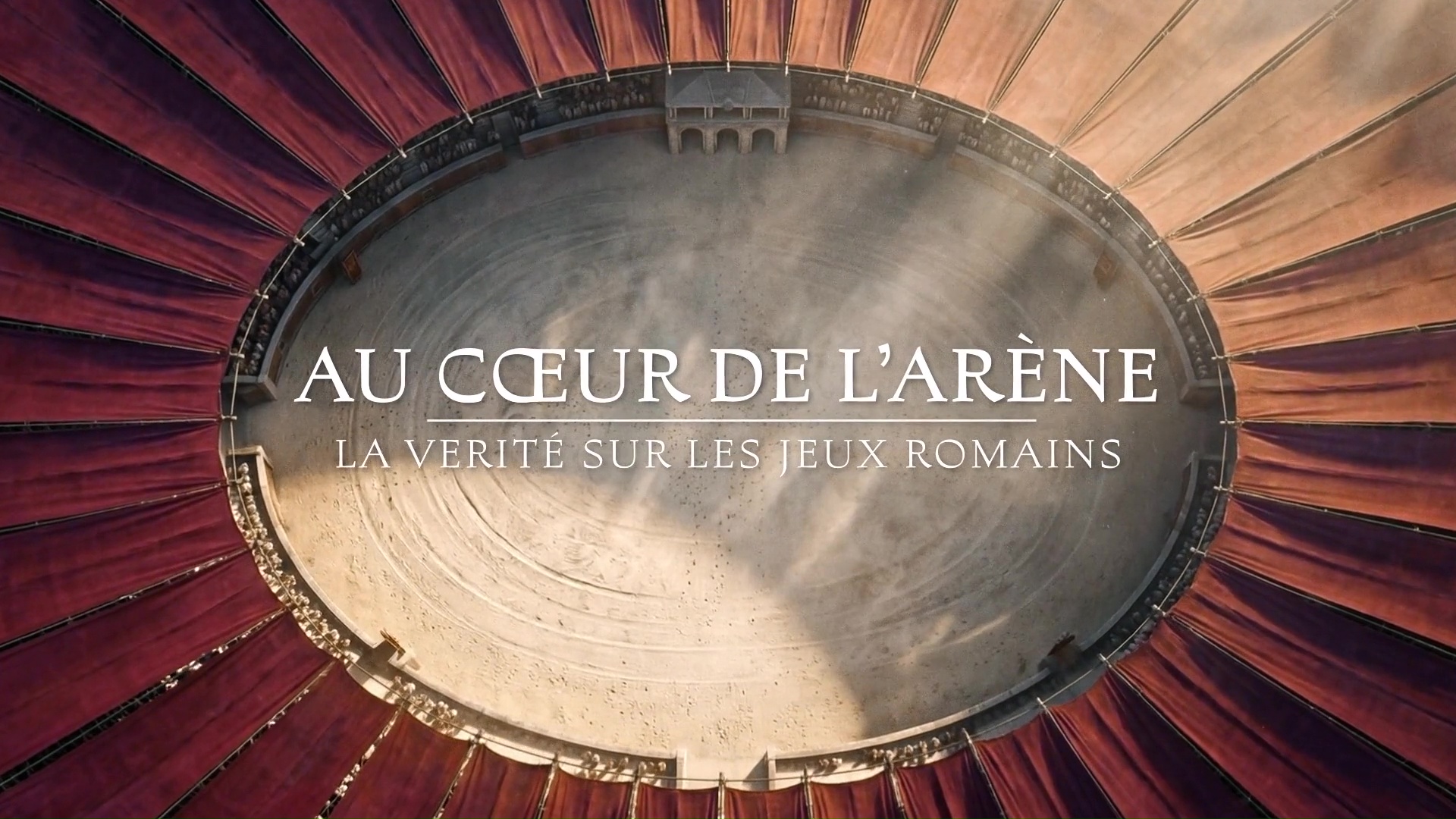

In Antiquity, gladiatorial combat was not the most fascinating spectacle for the Roman people. The true stars of the arenas were wild beasts. Lions, bears, panthers, elephants — thousands of these animals were captured at the farthest reaches of the Empire and transported to Rome to be exhibited in grand games offered by the emperor.
Behind these spectacles lay a colossal organisation, largely forgotten today. Who hunted these animals? How did they travel across Europe and Africa to reach the Roman arenas? And what role did Gaul play in this vast trade?
This spectacular deep dive reveals the secret routes, capture techniques and extraordinary logistics that fed Rome’s insatiable appetite for entertainment. An immersive and arresting exploration that uncovers another side of the circus games — one of power, domination and fascination with the wild world.
AN UNPRECEDENTED ANGLE
For the first time, a documentary places the animal — rather than the gladiator — at the centre of the history of the Roman games. Behind the spectacle lies a colossal industry, here revealed through striking AI reconstructions.
FRANCE AT THE HEART OF THE STORY
Far more than a mere province, Arles was a strategic crossroads between Rome and the Mediterranean world. Produced in partnership with the City of Arles, the film was shot inside the amphitheatre, listed as a UNESCO World Heritage Site.
ANIMAL TRAINER FROM THE CULT FILM GLADIATOR
Thierry Le Portier, one of France’s greatest big cat trainers, brings a rare dimension to the film: what a lion feels and thinks when faced with a human being — knowledge held only by those who have spent decades living alongside these animals.
A CONTEMPORARY RESONANCE
This system drove the local extinction of the Atlas lion, the North African elephant and several species of panther. A question that the Roman legacy continues to put to us across the centuries: what do we take from History?
Satisfaction Group
Awpg Group
Satisfaction Group
Awpg Group